End-to-End Self-Service Customer Journeyexecuted
I broke “discover → arrive → book → play → leave → clean” into a complete path that runs without staff on site, and kept optimizing every breakpoint.
A lot of the work looks scattered, but it is really the same thing happening over and over. I find that pattern and turn it into a process that runs without constant supervision — proven in a board-game venue, a nail salon, and Web3 projects.
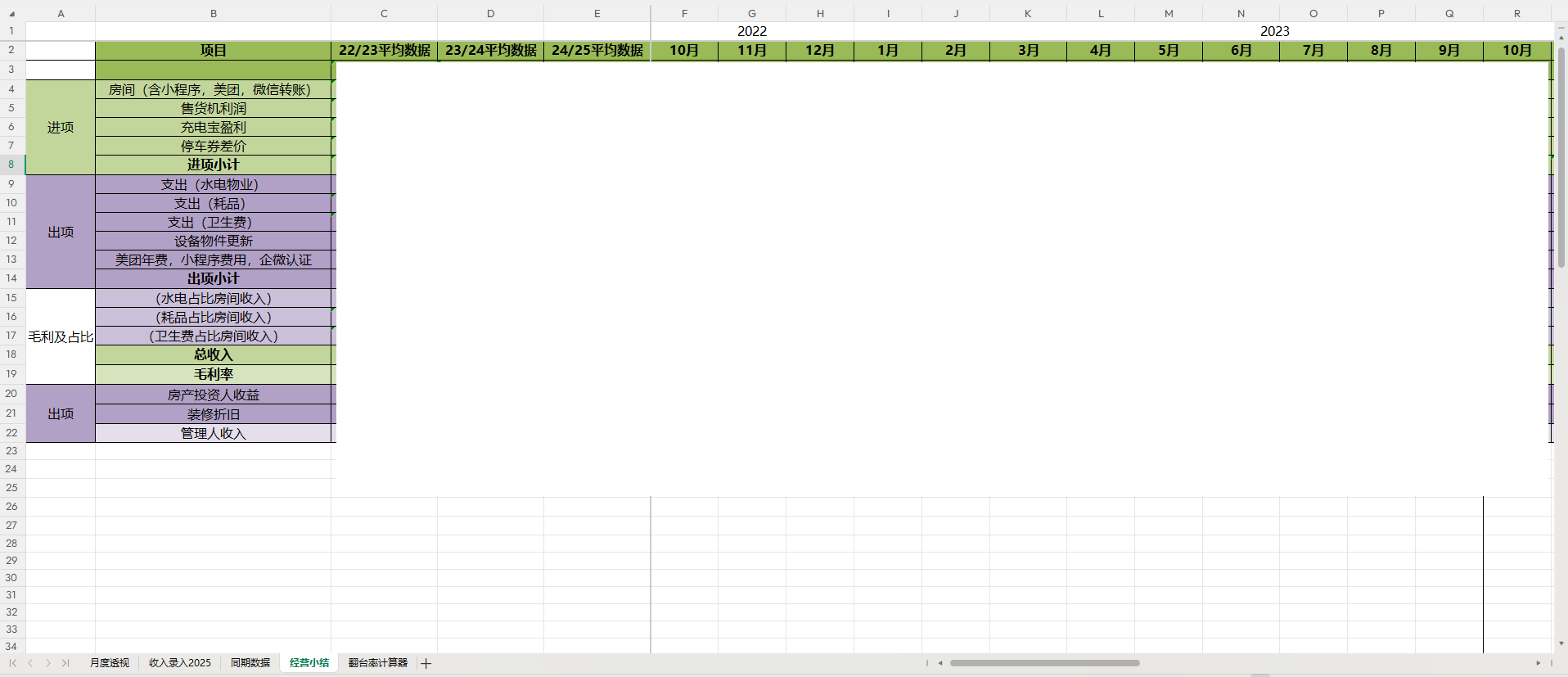
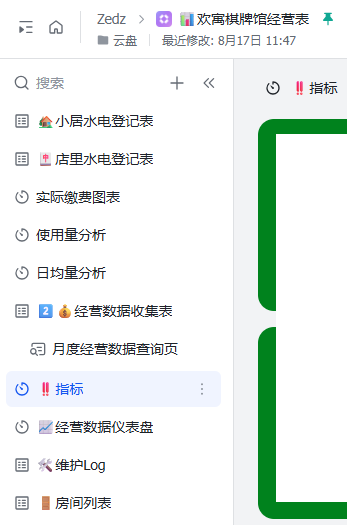
In October 2022, I took over the commercialization and day-to-day operations of a 24/7 self-service board-game venue. When customers could not operate the equipment, they had to call someone for help — I turned problems like this into self-service flows, in-store guidance, SOPs, and operating dashboards, compressing routine management to under two hours a week.
The business recouped its investment in the first year and has been profitable every full operating year since. Since March 2024 it has accumulated 1,200+ deduped paying users, with about 27% making at least one repeat purchase (a conservative measure).
Over the past year I deliberately reduced my involvement to free up time for Web3 and AI exploration; average monthly revenue fell about 18% over the same period. My current judgment is to dial part of that back and stabilize the revenue base first.
I broke “discover → arrive → book → play → leave → clean” into a complete path that runs without staff on site, and kept optimizing every breakpoint.
Customers who could not set up a machine used to call, or even require me to show up. After breaking the process into standard steps with illustrated guides, in-store instructions, and voice guidance, most people solve it themselves within two minutes, and on-site intervention caused by operating issues has basically disappeared.
Repositioning and Rebuilding a Web3 Ecosystem Platform
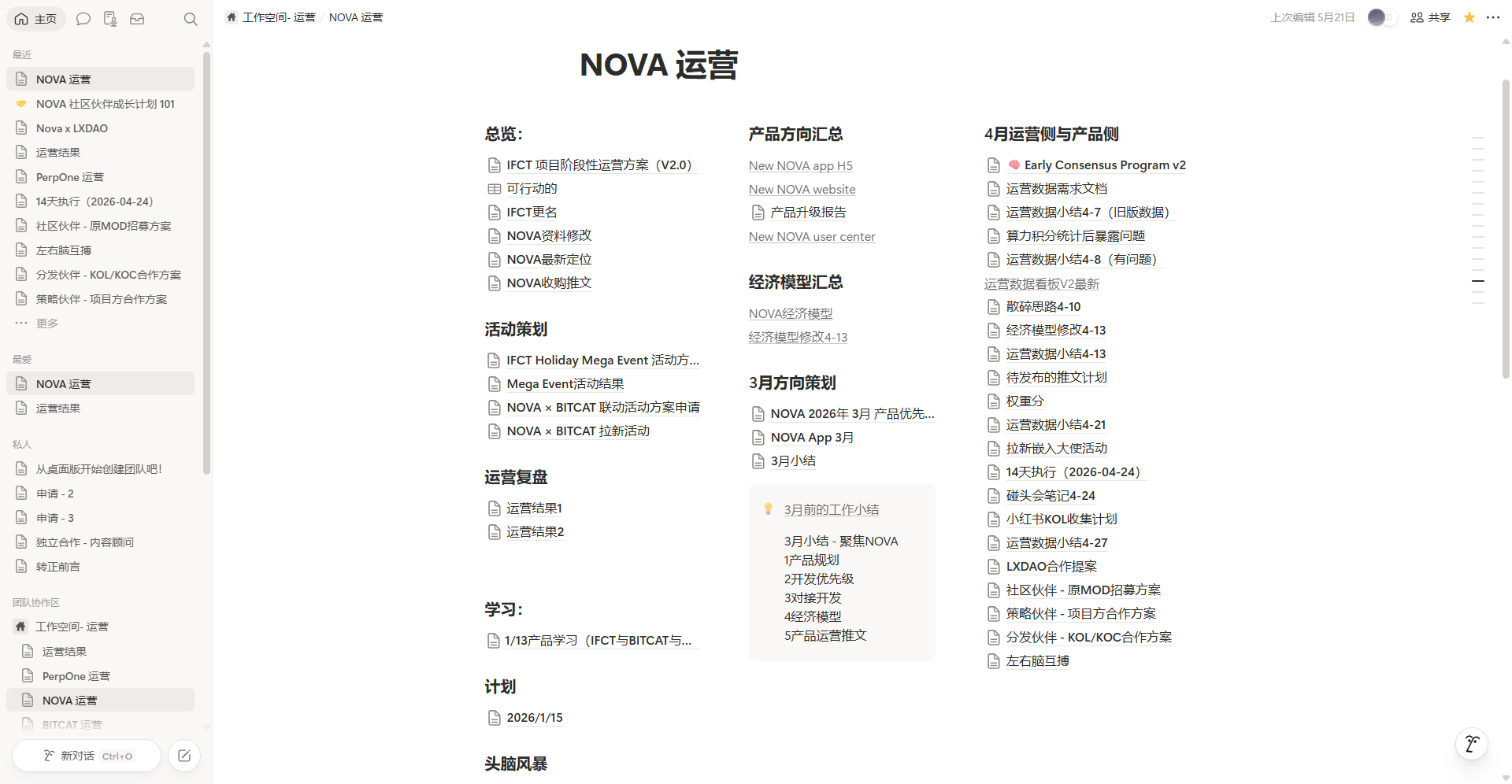
I took over a Web3 project that had been stalled for nearly a year. The website, H5, and Android app were all still there, but the narrative was too scattered — neither users nor project teams could say what problem it solved.
I used the existing product end to end, then repositioned NOVA from “a bit of every Web3 narrative” into an ecosystem-incentive and project-launch platform.
There were almost no development resources and zero paid-acquisition budget. Using “open recruitment → 7-day real-task trial → selection → waitlist,” I generated about 100 applications and 20+ people who actually got involved.
When I took over, the site, H5, and Android app were live but had been stalled for almost a year. Instead of proposing a redesign right away, I used the entire product first, mapped its features and narrative, and concluded the core problem was not missing features — it was scattered positioning and an unclear value proposition.
The original project covered multiple Web3 narratives at once, making it hard for users and project teams to quickly grasp the value. I rebuilt two paths — “discover → participate → reward” for users, and “cold start → community → feedback → growth support” for projects — repositioning NOVA as an ecosystem-incentive and project-launch platform.
Designing an Experimental On-Chain Strategy Game
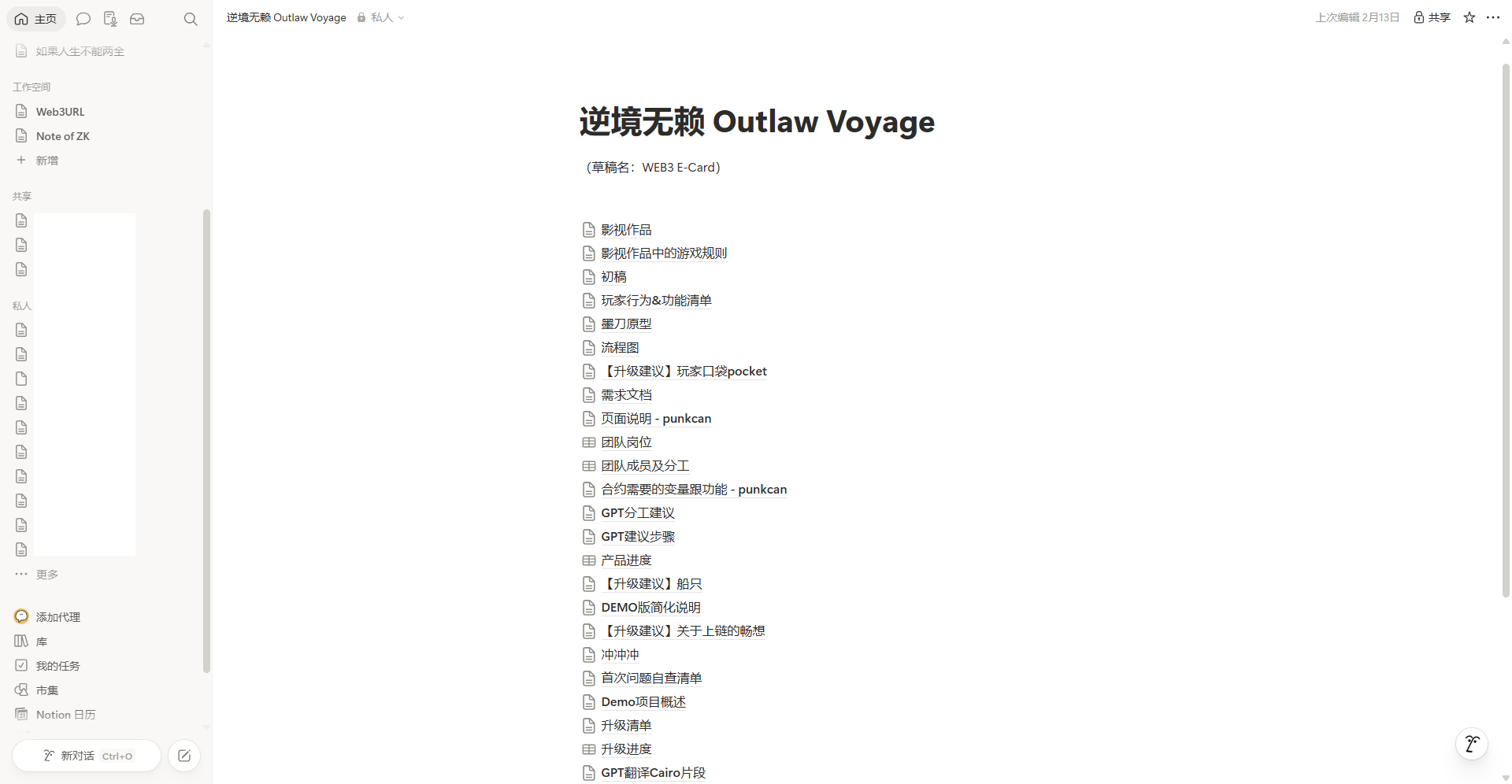
I initiated a Web3 strategy game whose rules come from the “restricted rock-paper-scissors” in the manga Kaiji (Gambling Apocalypse).
The mechanics were defined together with a co-initiator; I then translated them into a product: the end-to-end player journey, feature list, requirements documents, and interactive prototypes.
Within one co-learning cycle, working with about five developers, we built a demo that connects a wallet, handles sign-up, plays a full round, and produces real on-chain interactions — earning 2nd place at Demo Day (out of 4 entries). P.S. I did not build the smart contracts or the front/back end.
The project started from the “restricted rock-paper-scissors” rules in Kaiji. As initiator, I found a co-initiator and, through repeated discussion, locked the rules into an implementable on-chain game mechanic — it became the rule base for all user flows, features, and documentation.
Complex rules do not equal a playable experience. I independently mapped the full player journey — from sign-up and waiting, to entering the table, taking turns, and final settlement — turning the rules into a concrete sequence of steps and states.
Digitalizing a Traditional Business and Building a Content-Led Growth Funnel
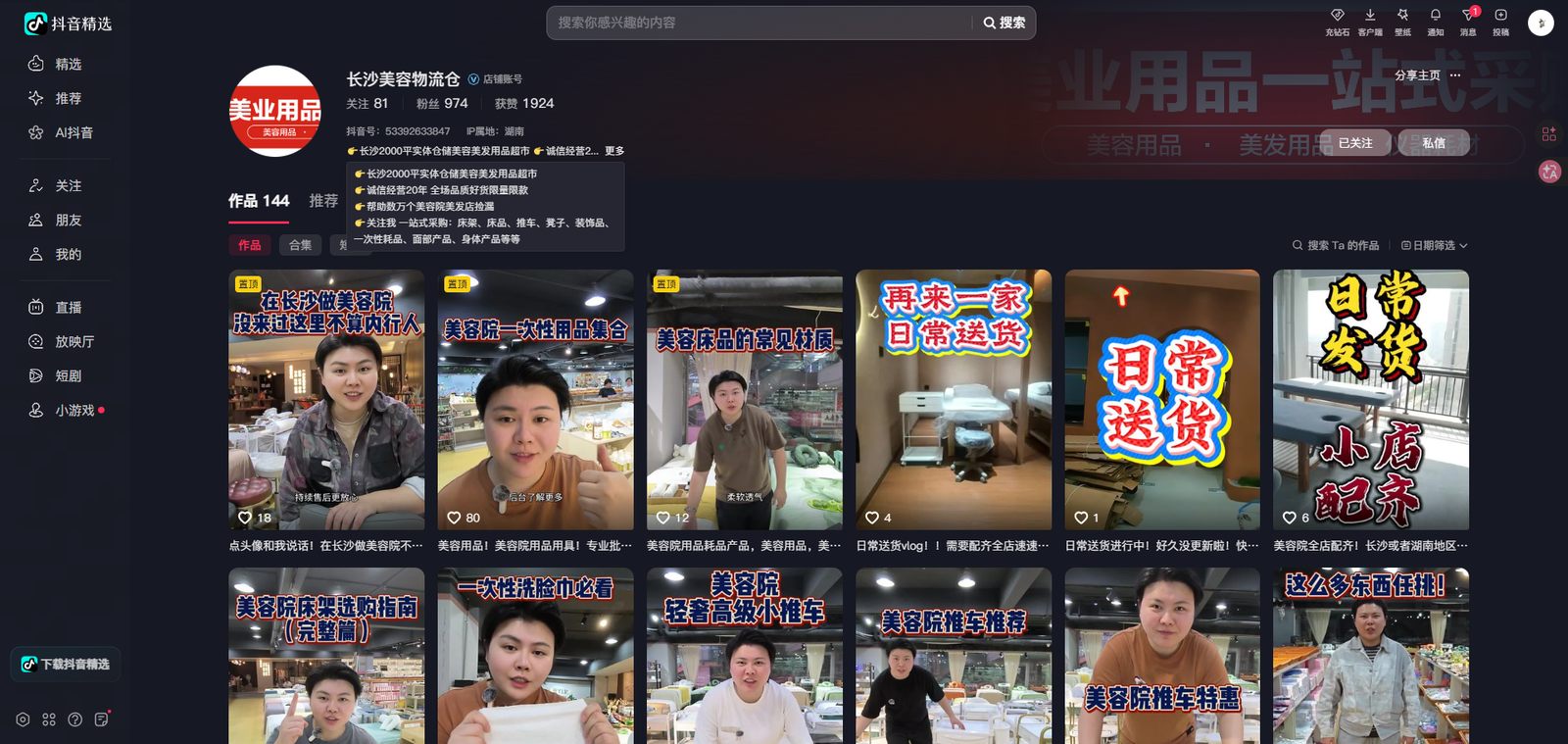

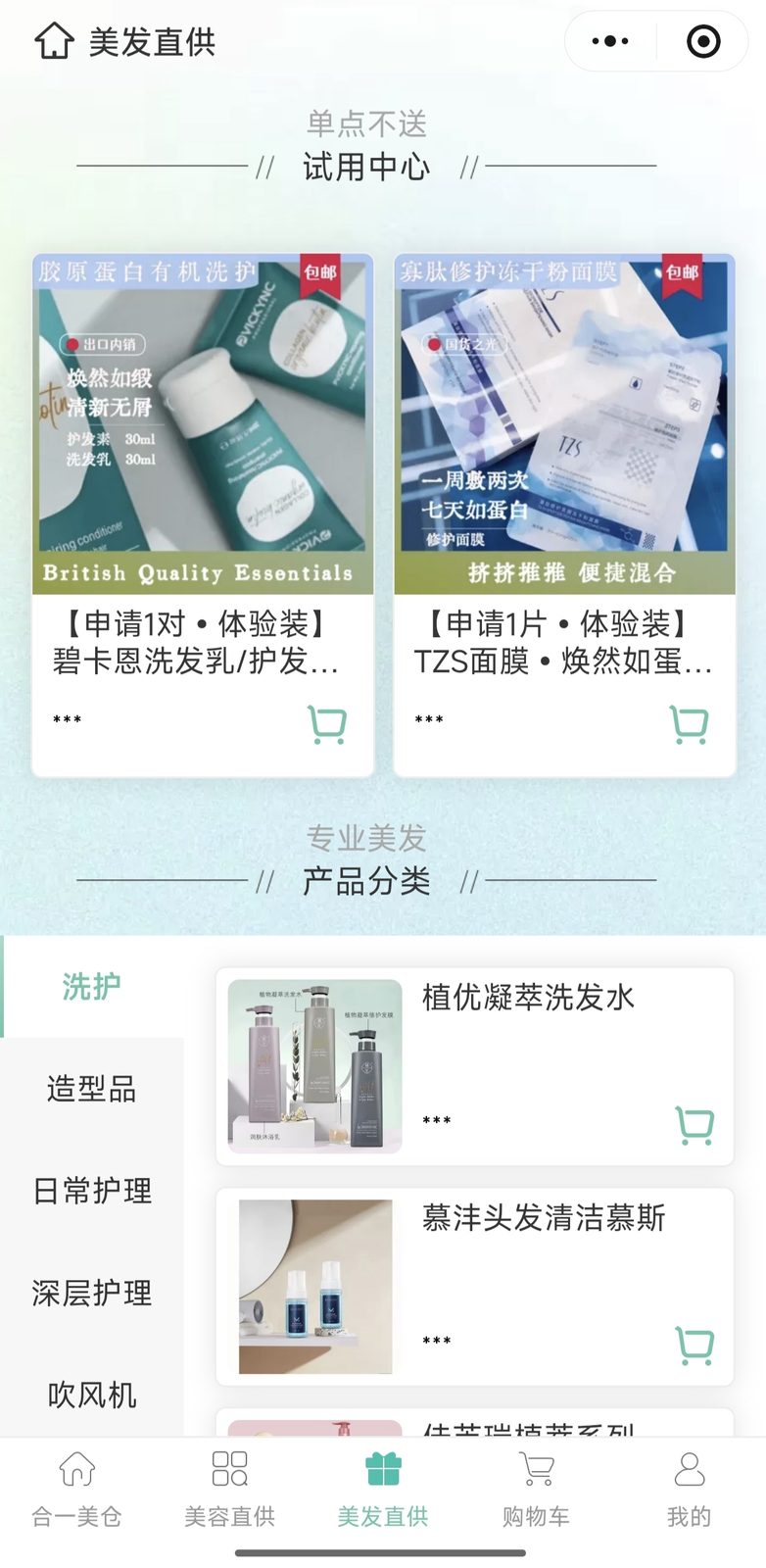
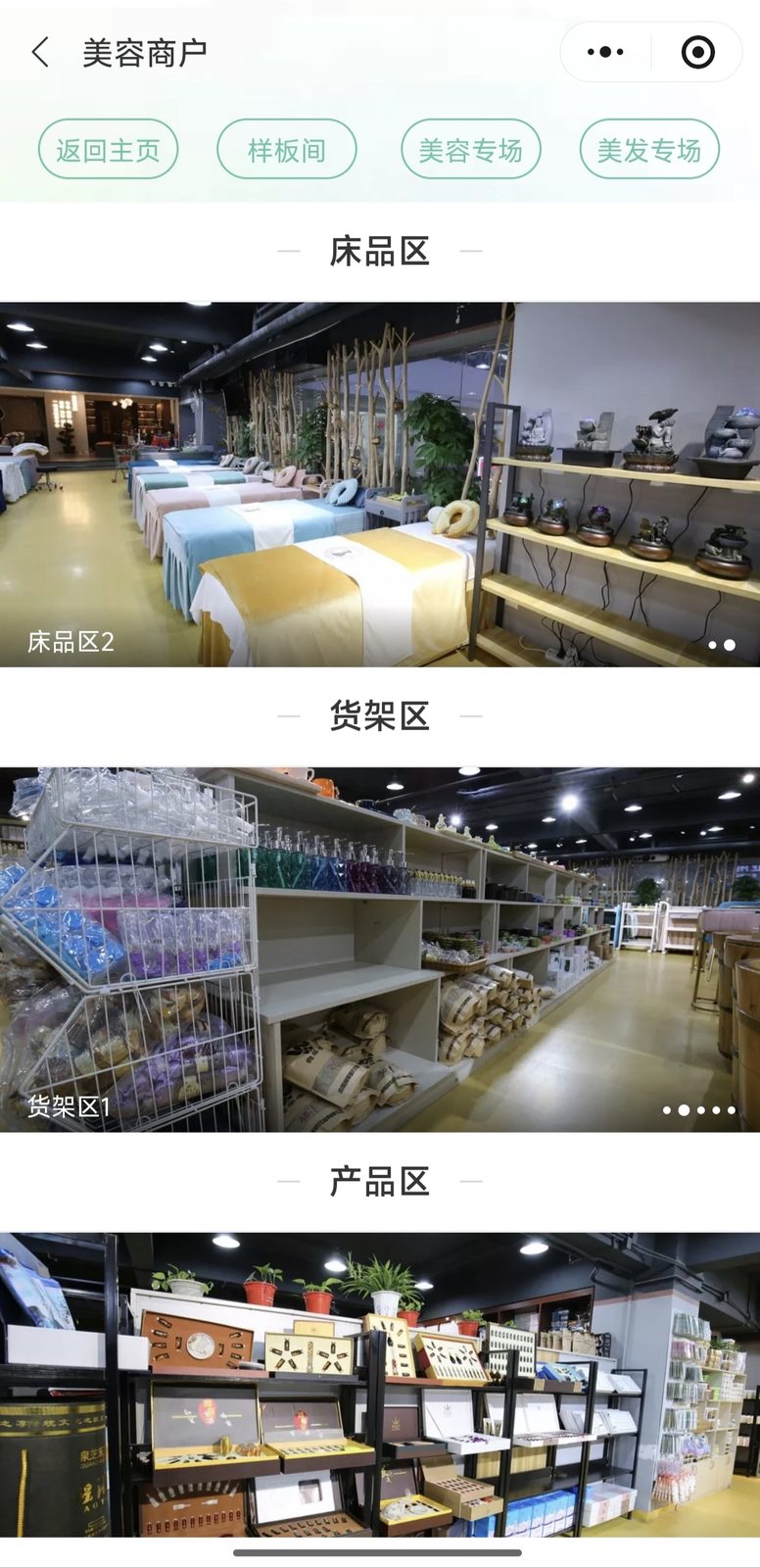
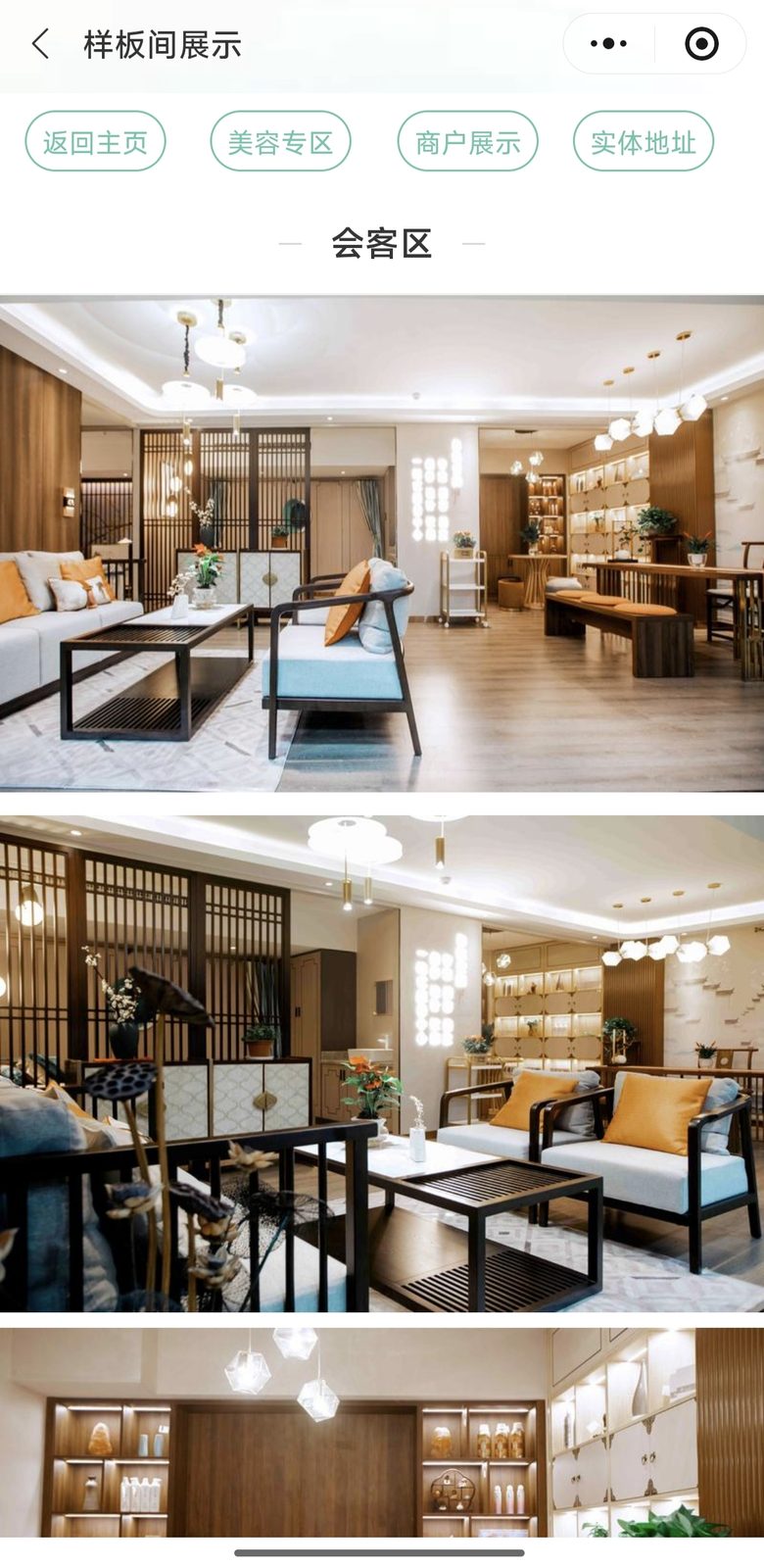
A traditional business supplying furniture, supplies, and consumables to beauty salons — previously almost entirely reliant on physical showrooms and offline sales visits.
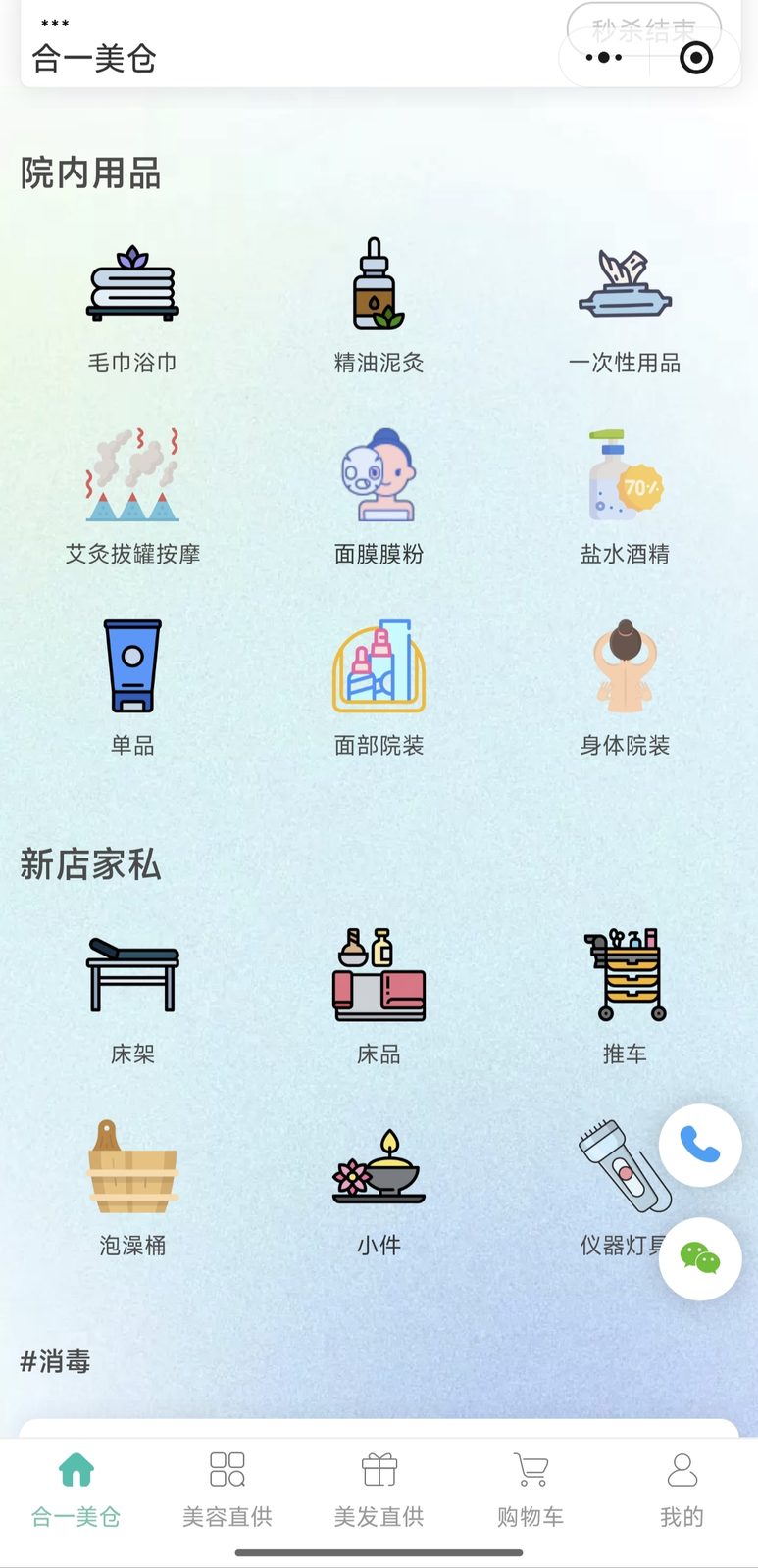
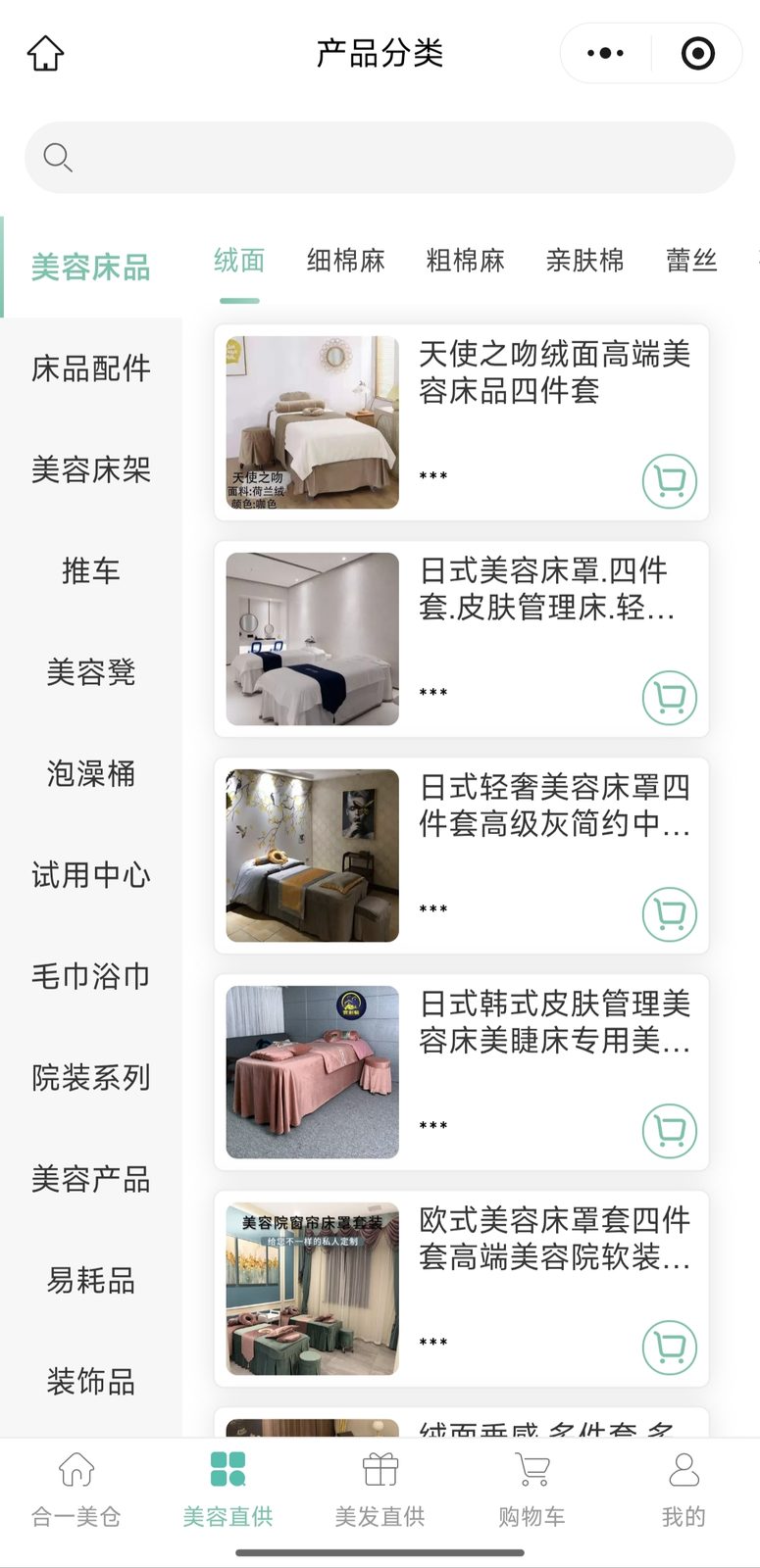
I built a 400+ SKU digital product catalog with no-code tools. Which products rank first was decided by sales rankings and margins pulled from the finance system, not by aesthetics.
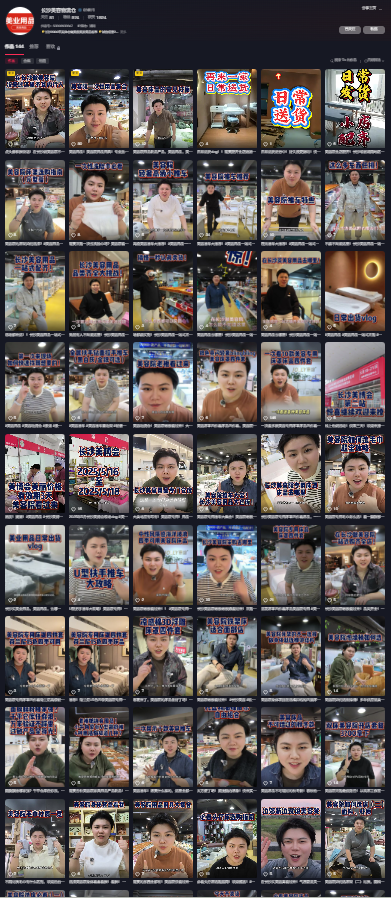
Then I appeared on camera, shot, edited, and published myself, distributing across platforms to funnel leads into private channels. In the early days I handled inquiries and closed deals personally; once the flow worked, I pulled colleagues into a group and handed it over.
The traditional business relied mainly on physical displays and offline sales. I designed the digital catalog from scratch with a SaaS/no-code mini-program — owning the pages, modules, categories, and product organization — and unified the categorization, naming, images, pricing, and specs of 400+ SKUs. I shot some of the product photos myself.
A digital catalog has to decide which products get seen first. I dug into the finance system for sales rankings, margins, and category performance, and used them to guide display order instead of relying purely on subjective taste.
Building an Operating System for a People-Intensive Service Business
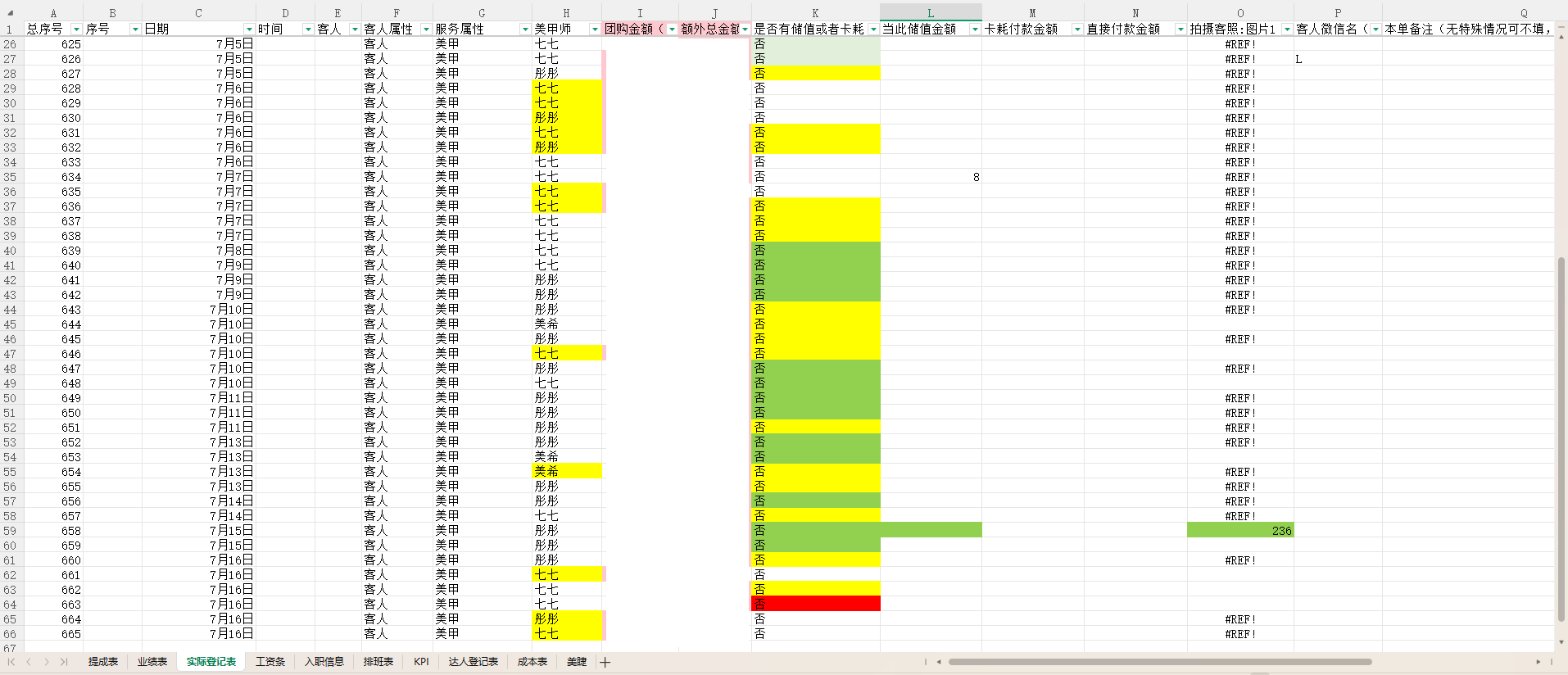
I was the operations lead at a nail salon. I had never worked in this business format before, but I had years of business-operations experience at Changsha Jingyi.
Instead of fumbling from zero, I brought over proven structures from day one: commissions, performance, attendance records, payslips, onboarding, scheduling, KPIs, creator registration, costs — covering the five objects (orders, people, money, service, creator partnerships) in one pass, then adding fields as the business became clearer.
The salon ran from late March to late August 2022, and I maintained the system for the entire cycle.
A single nail-salon order involves the customer, the service item, the technician, group deals or add-ons, payment method, and commission. I designed the order table’s field structure from scratch so it could simultaneously support revenue stats, technician performance, commission calculation, rankings, and monthly analysis.
I handle customer complaints in two steps: first, proactively resolve or reasonably compensate to restore the immediate experience; then look back at the service-quality issue behind the complaint and connect it to employee incentives and management.
A Fact Base with Enforced Claim Boundaries
Everything I have done was scattered across memory and various records. Write the same fact in different places, update one and forget the other — and you end up with two conflicting versions.
The easiest mistake in job-search materials is not fabrication; it is quietly upgrading claims: a spreadsheet you built becomes “developed a system,” AI-assisted work becomes “done independently,” something only you use becomes “has users.”
I organized these experiences into a rule-bound knowledge base: every record states what can and cannot be claimed; numbers must carry their counting method; outdated numbers may not linger anywhere; dates must note what they were verified against. The rules do not rely on self-discipline — they are enforced by checks that throw errors.
This base is very new and currently used only by me. The check scripts were written with AI assistance; I own the rules, fact confirmation, and acceptance.
I corrected a number, but it was still stale in another section — two conflicting figures in the same material. This actually happened twice.
I had misremembered two projects’ timelines by two years. Matching them against business licenses, WeChat records, QQ mail, and the finance system took real effort.
From Tool Trial to Published Sets
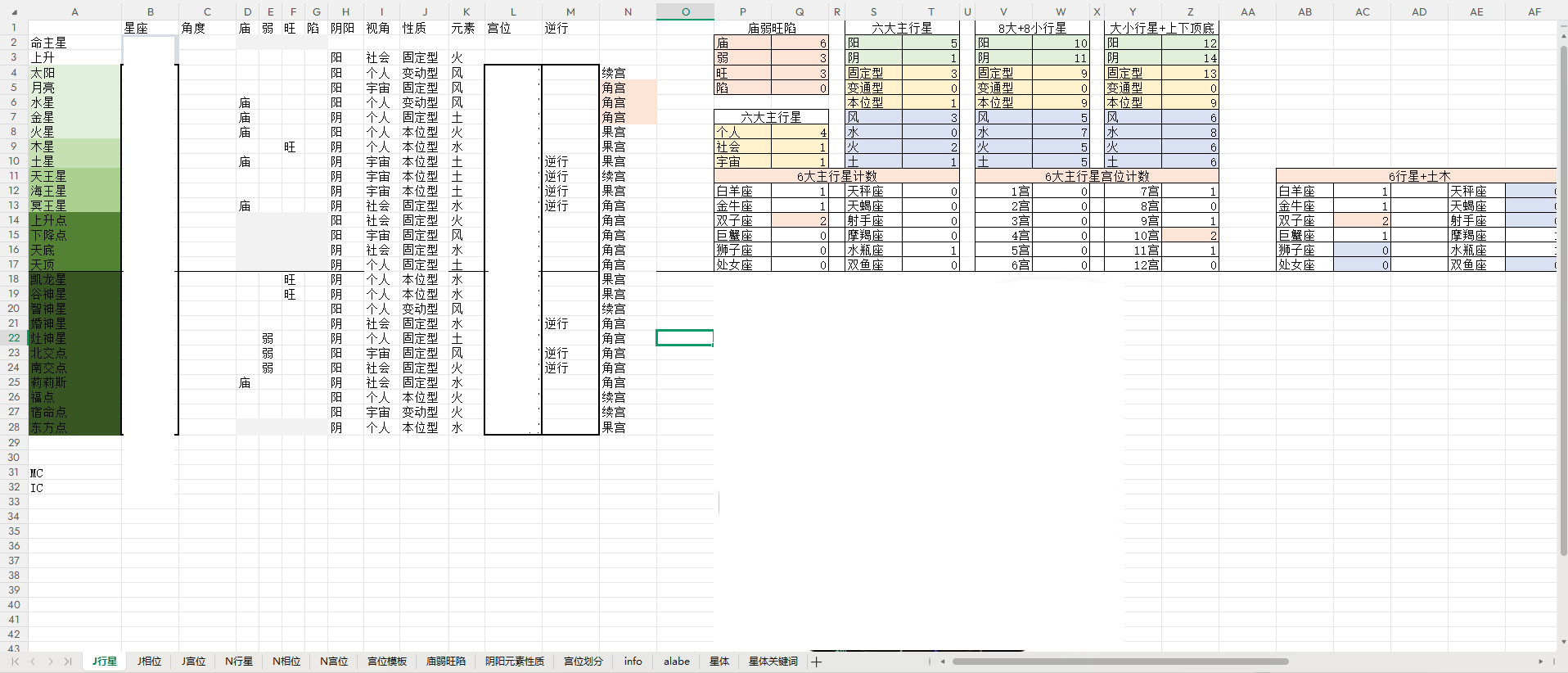
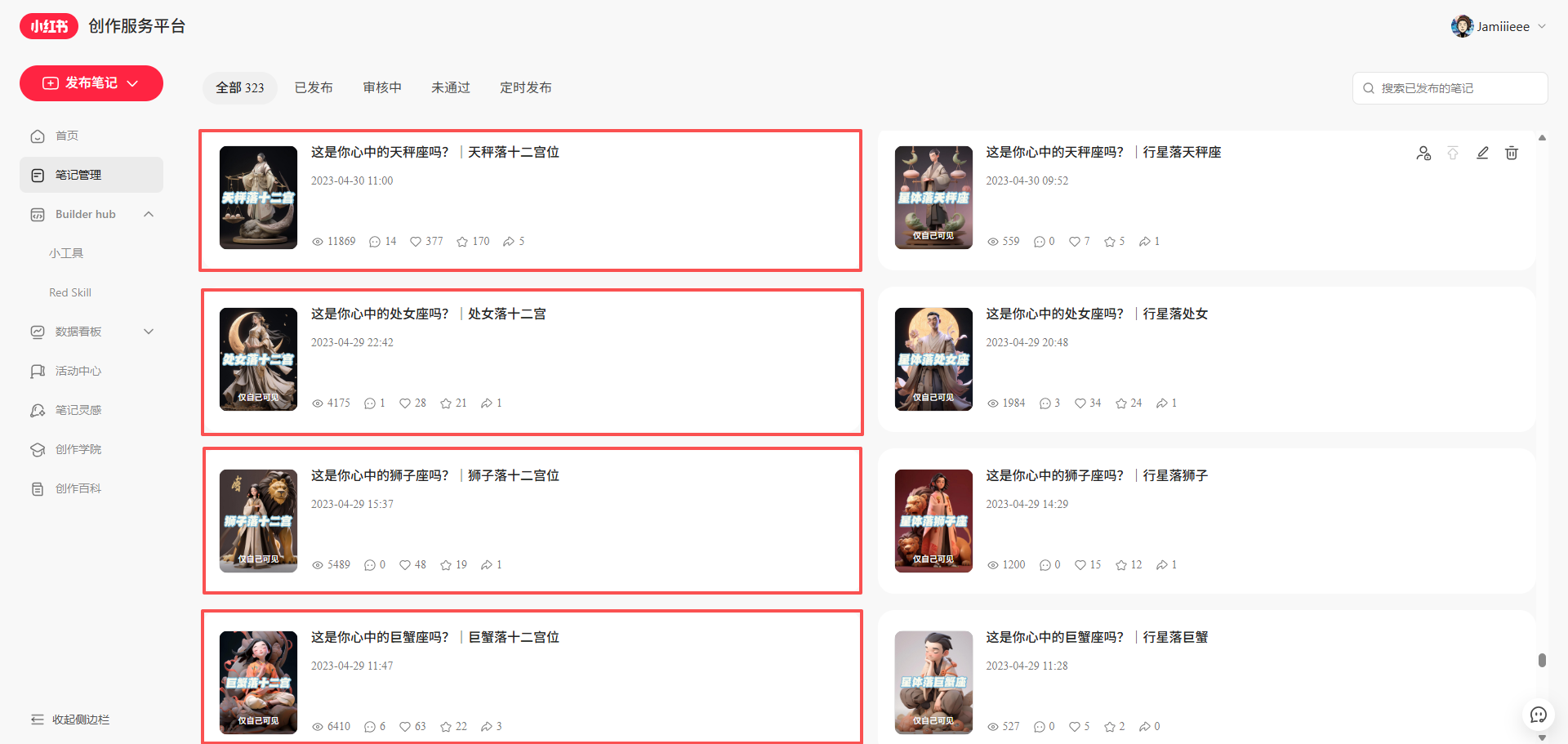
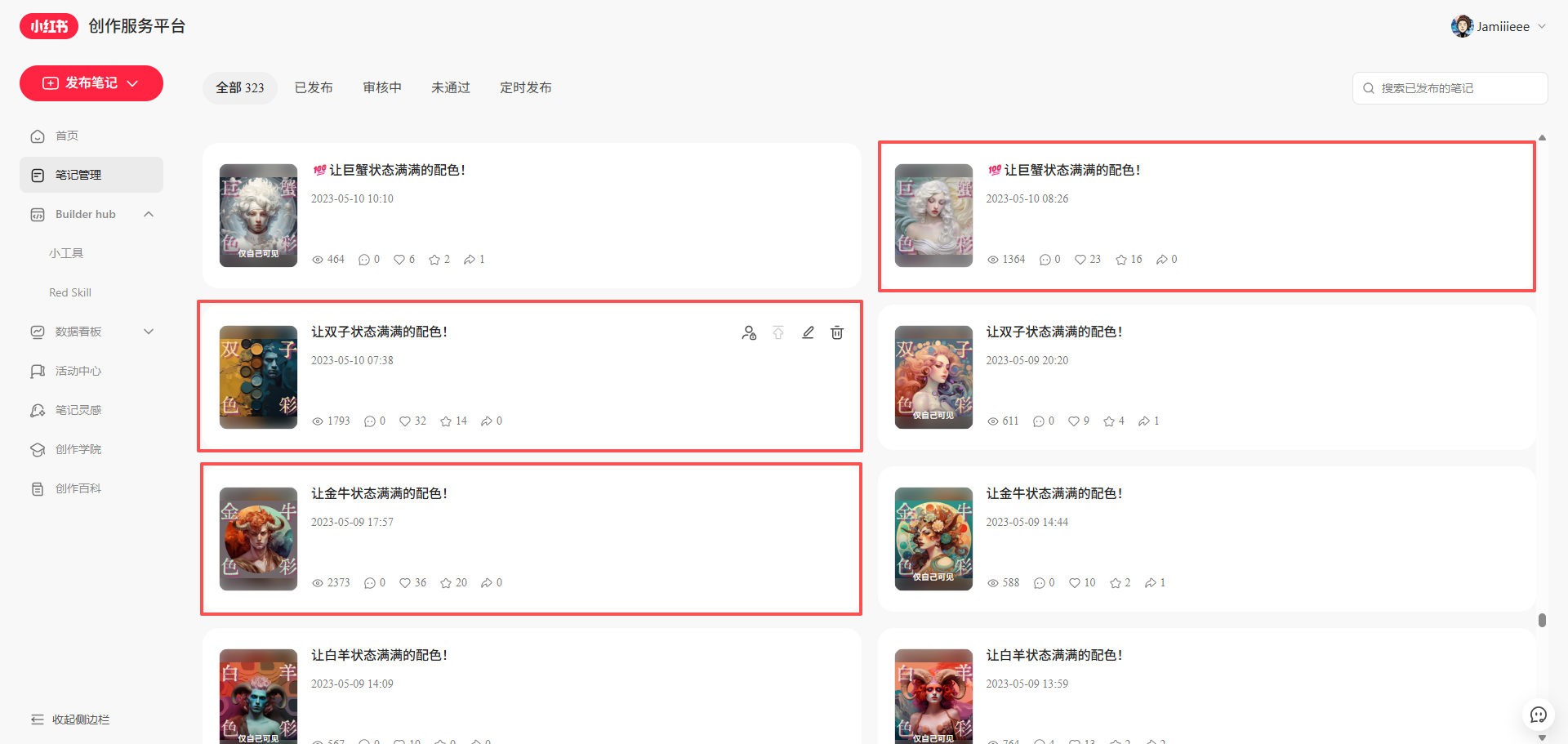
I started using Midjourney in April 2023, at first just for fun. To get fluent with the tool, I picked a direction where I had knowledge reserves and whose subject matter comes with a built-in enumeration structure — astrology.
Twelve houses, twelve signs, color correspondences — one series is exactly 12 posts; later I made 15 phone-wallpaper posts. Four series, 50+ posts in total, all published on the same Xiaohongshu (RED) account.
The hardest part of sustained output is not making images — it is deciding what to make each time. So I picked subjects with built-in enumeration: twelve houses, twelve signs, color correspondences — exactly 12 posts per series. The output rhythm is set by the structure; no separate content calendar needed.
Content was distributed purely through organic reach, with no paid promotion. The series produced posts with 10,000+ views and nearly 400 likes.
Organic Reach and PR Collaborations, Run on a Tracking Sheet
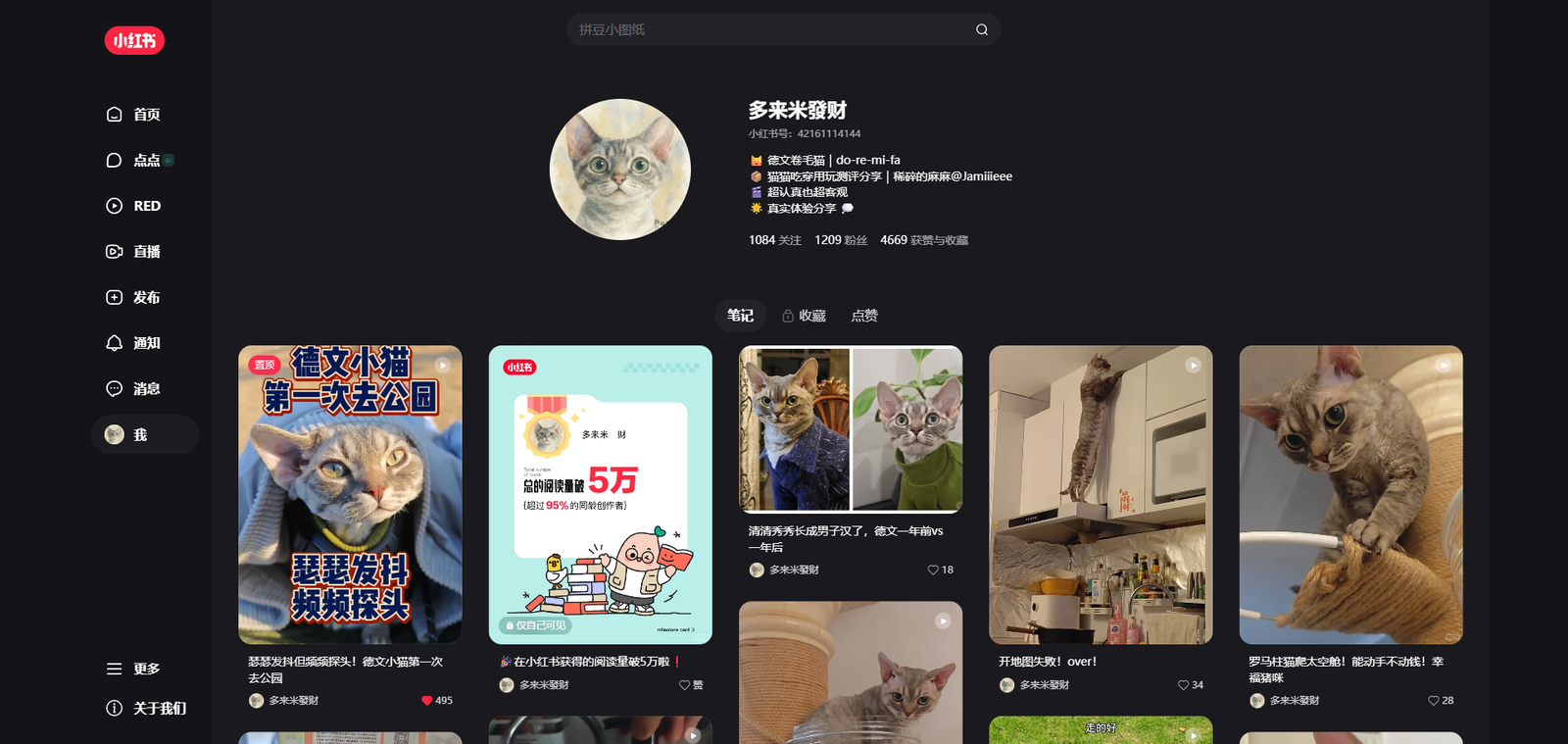
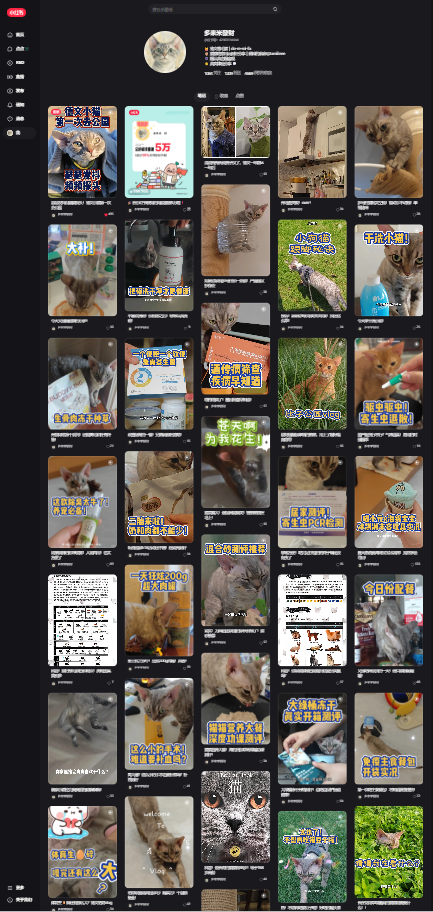
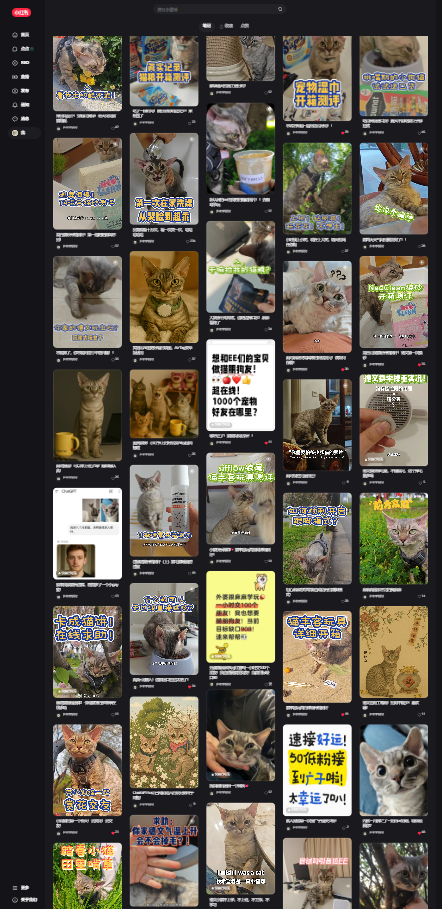
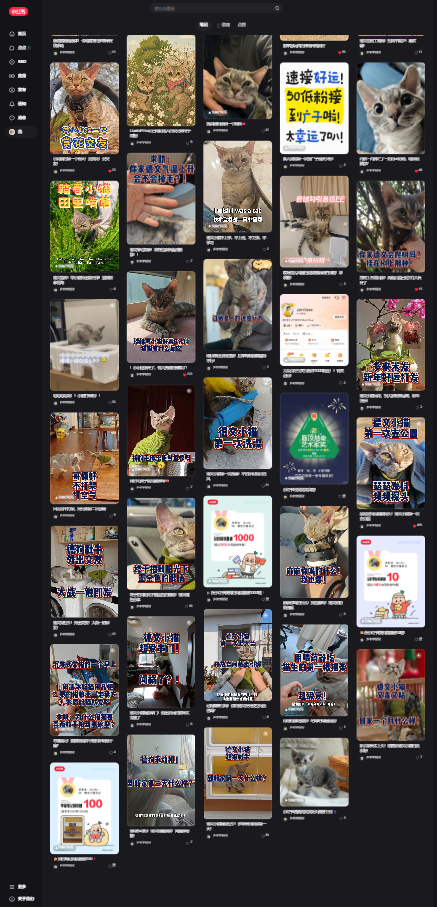
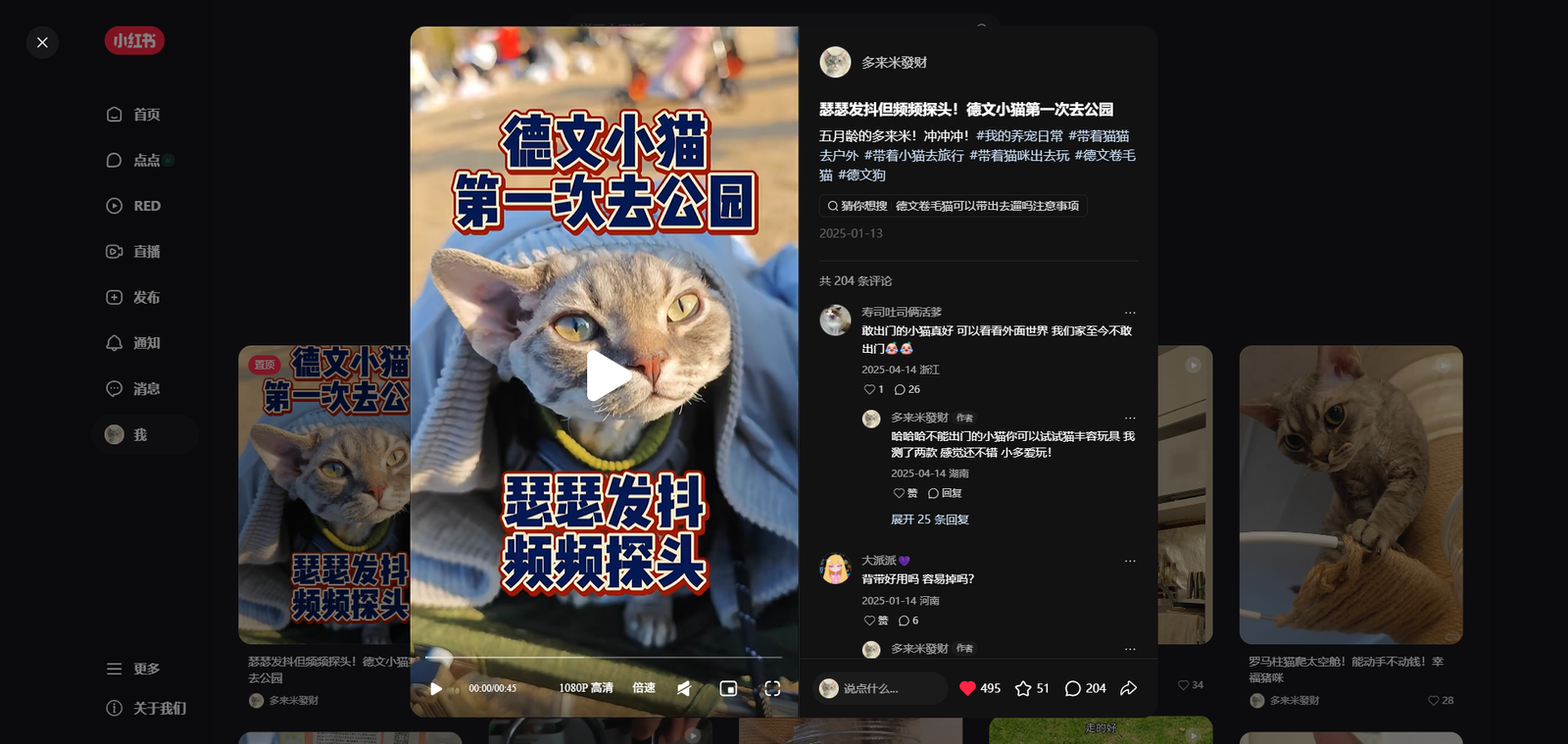
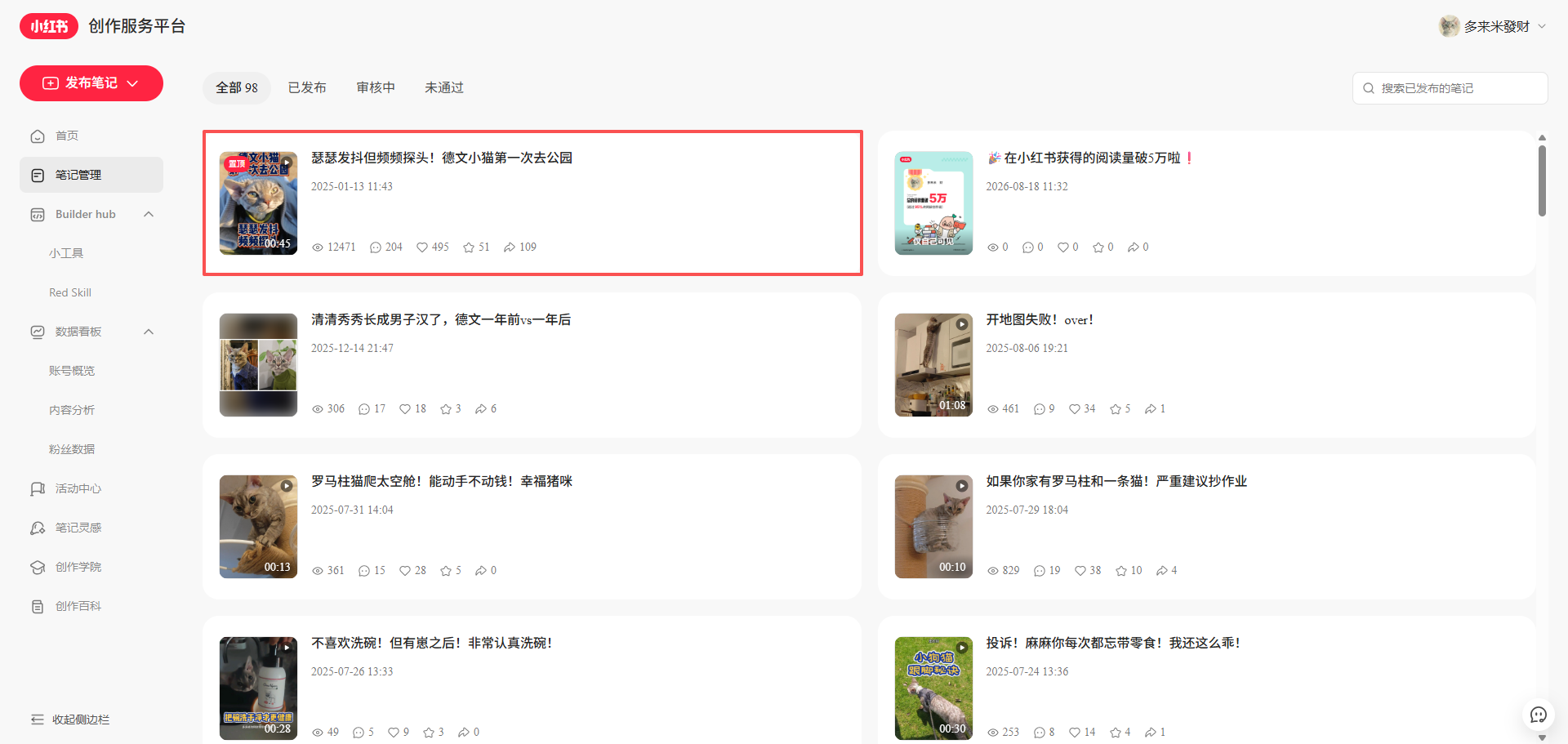
I run a Xiaohongshu account “Do-Re-Mi” for my Devon Rex cats — all content shot and edited by myself, with zero paid promotion.
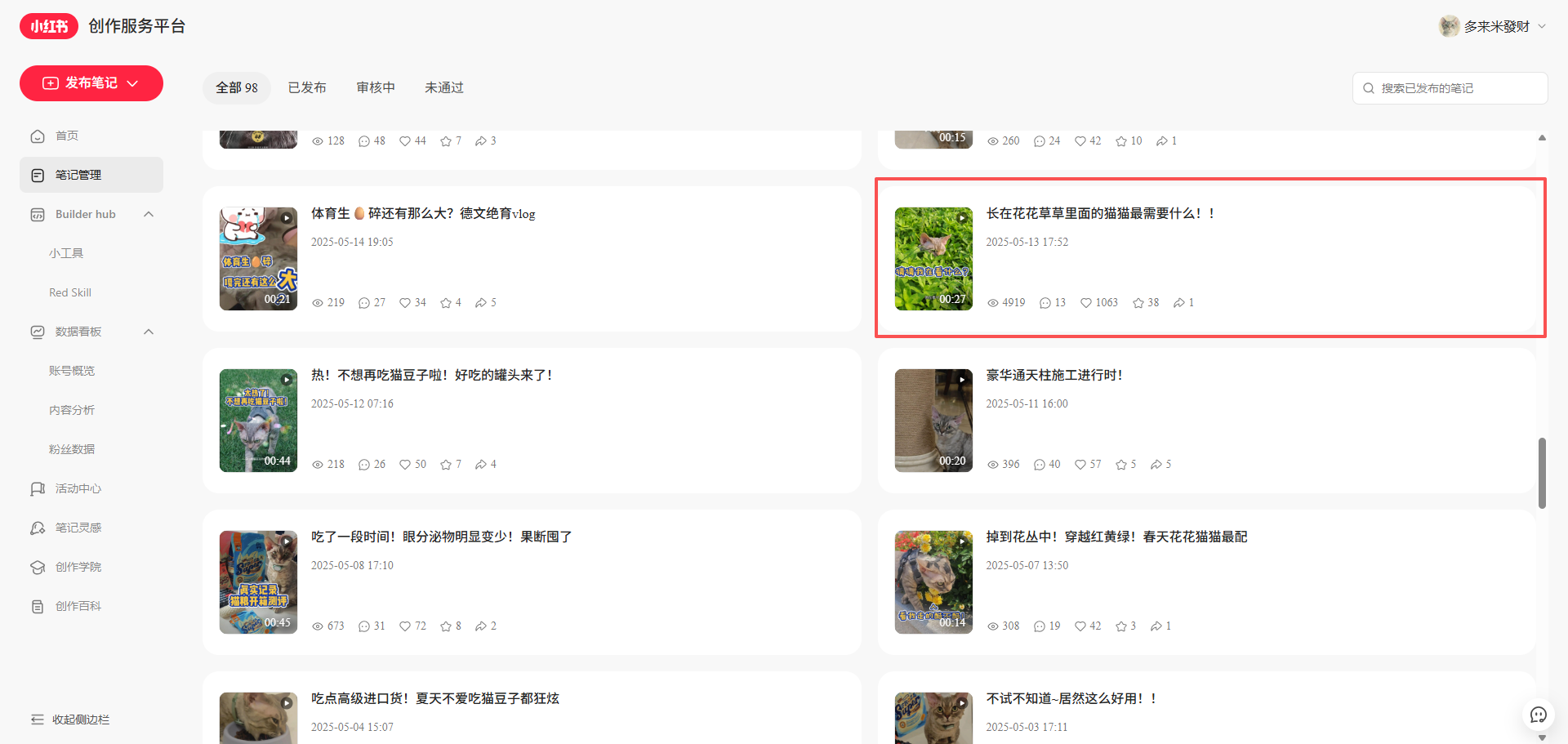
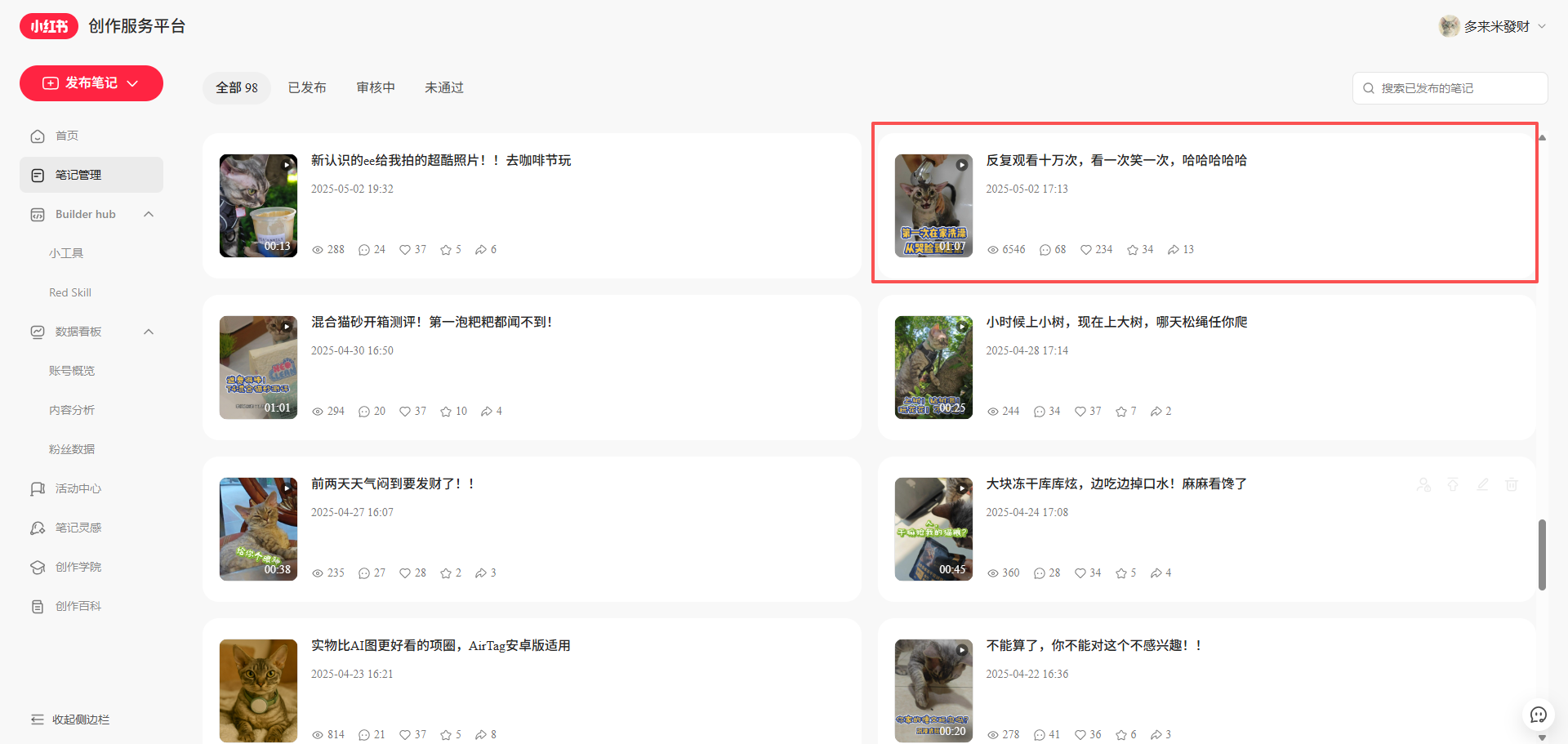
The account produced several mini-hits: the top one reached 12,000+ views and nearly 500 likes; even sponsored collaboration posts reached about 1,000 likes. In August 2026, the account crossed 50,000 lifetime reads.
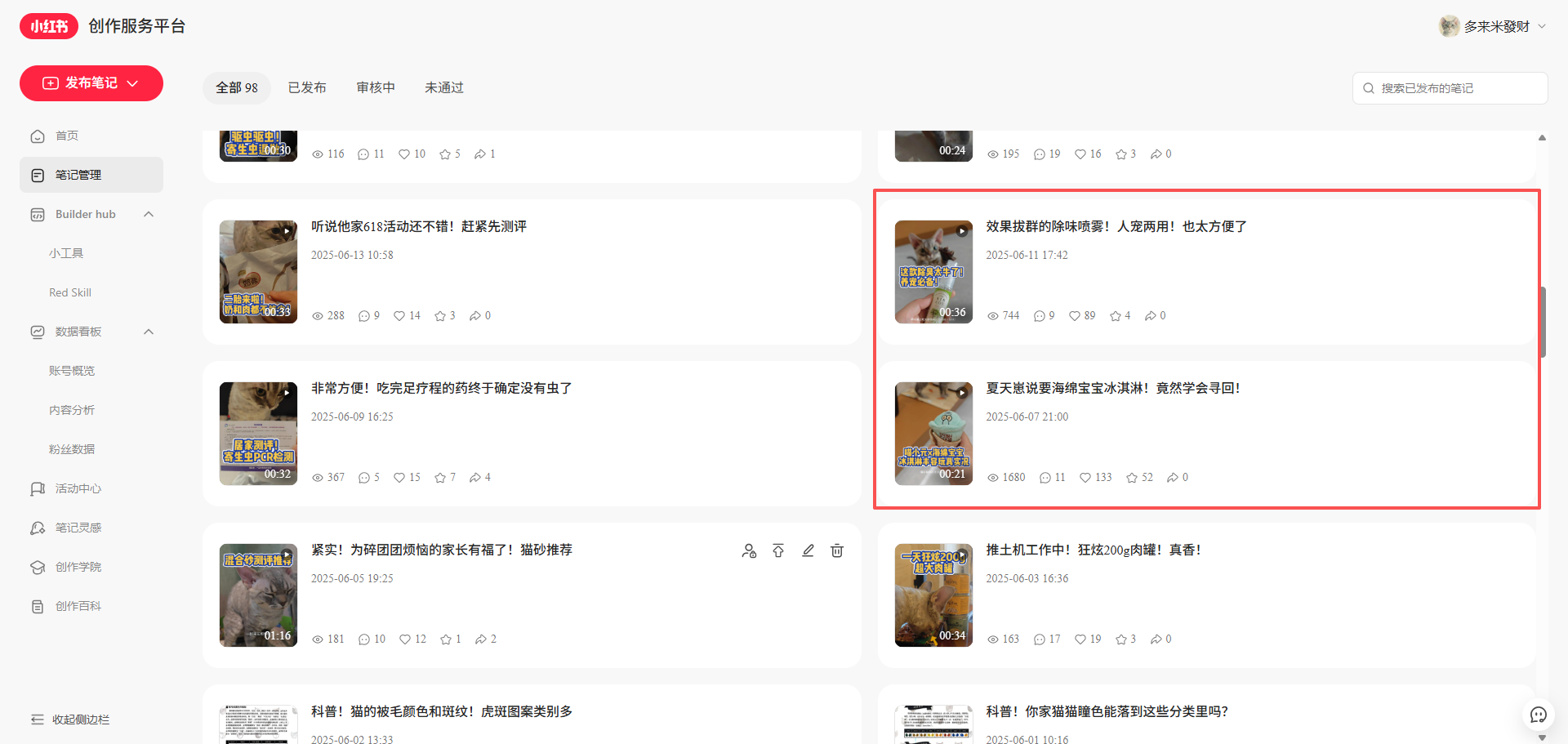
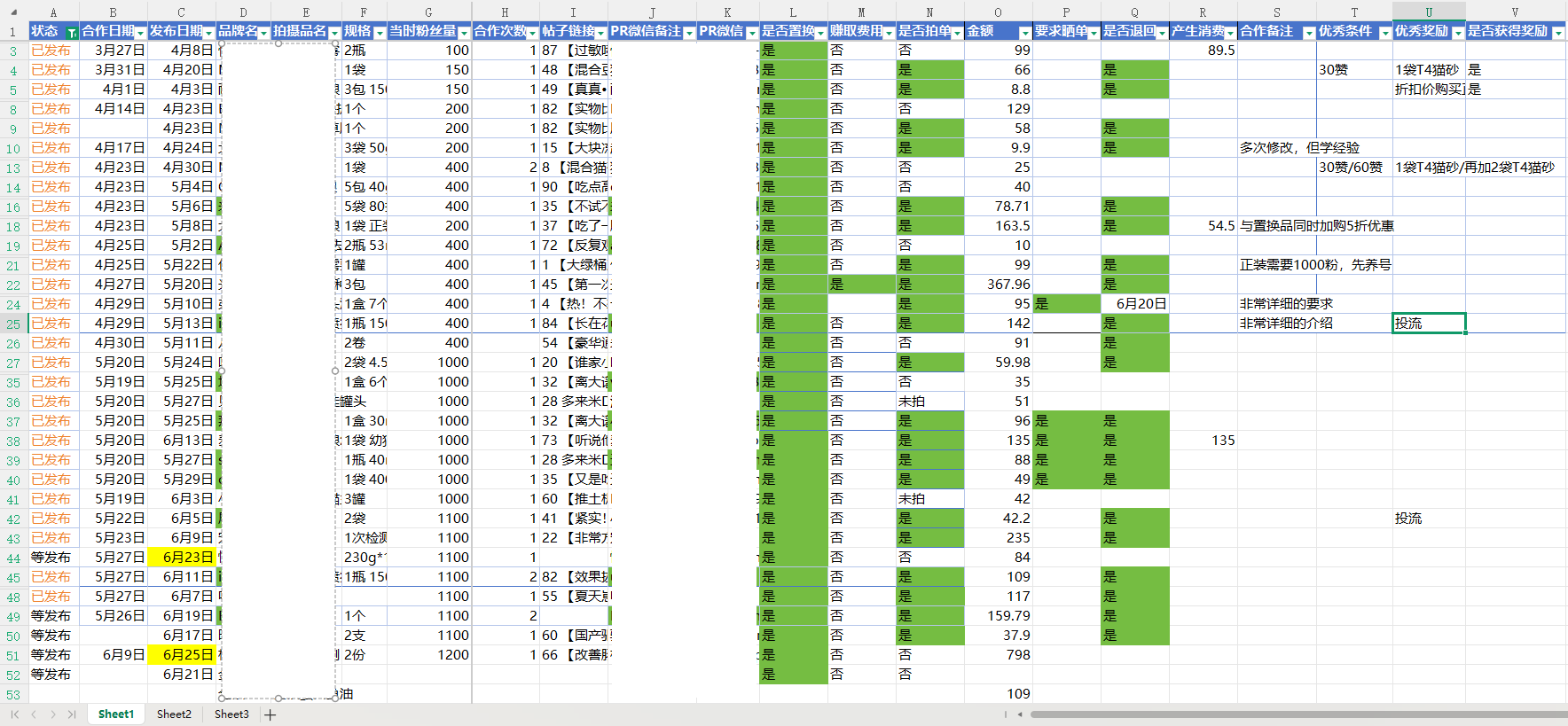
The following is small, but PR collaborations started coming in at just over 100 followers. Every deal goes into one tracking sheet: brand, product spec, barter or paid, order amount, publish status, and links — so I can see at a glance what needs to go out and what needs chasing.
Barter or paid, order placed or not, published or not — left in WeChat chats, things get missed. I log every collaboration as one row: status, dates, brand, follower count at the time, fee, and link, so publishing cadence and follow-ups have a basis.
Sponsored posts got no paid promotion either — the best reached about 1,000 likes and 6,000+ views on content alone, while the top regular note reached 12,000+ views. All figures are kept as creator-dashboard screenshots.